
Golf netting means mesh sold by the metre rather than a ready-made net, and it is how you turn a garage, garden or outbuilding into a safe place to hit full shots. Because you buy it by the panel or the roll, you can size it to the exact space you have.
Expect roughly £6 to £12 per square metre for heavy-duty ball-stop netting, or £50 to £120 for a ready-made barrier-netting roll. Made-to-measure panels from specialist UK suppliers cost more but fit your space exactly.
What actually matters is not the price but the specification: choose a 20mm knotted mesh rated for golf-ball speed, and hang it with enough slack to absorb energy rather than rebound it.
Here is how to choose netting that genuinely stops a drive, how much you need, and the safe way to hang it, plus when a ready-made net is the smarter buy. We haven’t stress-tested every netting type ourselves; the guidance below draws on UK supplier specifications and owner reports, and we flag where a verdict is research rather than hands-on.
Where to buy: ready-made barrier nets and netting rolls are on Amazon UK; for made-to-measure panels cut by the square metre, UK specialists such as Huck Nets, Collins Nets and Net World Sports will size netting to your exact space.
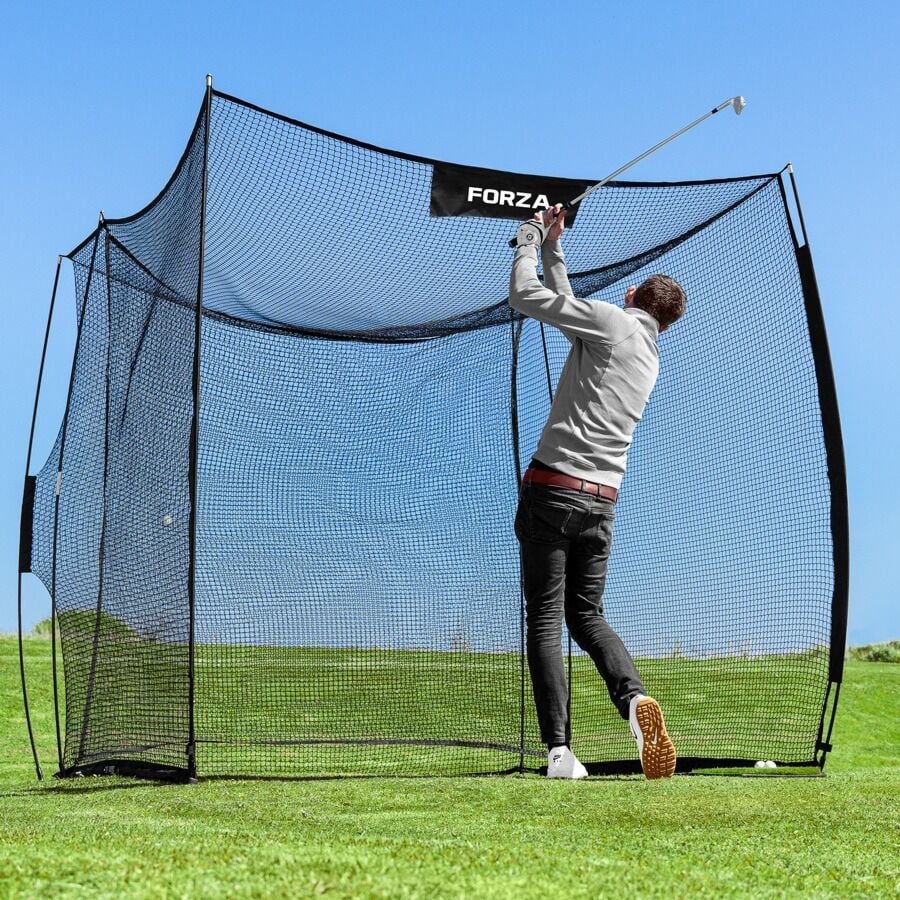
Golf netting vs a golf net: what’s the difference?
A golf net is a finished product: a frame with netting already attached, ready to hit into tomorrow. Golf netting is the raw material, panels or rolls of mesh you use to line a wall, fence a boundary or build a cage to whatever size you need.
That flexibility is the whole point. Netting can cover a full garage wall and ceiling, protect a long garden boundary, or wrap a custom hitting bay in a way no off-the-shelf net will, though it does need careful rigging to do it safely. If you simply want something to hit into this weekend, a framed net is the easier call, and our guide to golf practice and driving nets covers those. Reach for raw netting when no ready-made net fits the space.
Mesh size and gauge: what actually stops a golf ball
The single most important spec is mesh size. Around 20mm (roughly three-quarters of an inch) square mesh is the golf standard: small enough to catch a stray ball, not so fine it adds needless weight and cost. Generic debris netting, garden windbreak or construction barrier netting has a far larger mesh and will let golf balls straight through, so it is not a substitute however cheap it looks.
Beyond mesh, look for heavy-duty golf-grade netting, around 180gsm, knotted rather than knotless, in UV-stabilised polyethylene or nylon if it will live outdoors. Knotted netting holds up better to repeated driver-speed impacts, and the heavier weights are what UK suppliers rate for ball-stop use on cages and ranges. If you only ever chip, a lighter grade is fine; if you hit driver, buy the heavy-duty golf grade and nothing lighter.
How much netting do you need?
Measure the area you need to protect, then add for overlap and mishits. For a hitting zone, you want a panel comfortably wider and taller than your swing arc, around 3m x 3m as a minimum for full swings, plus side and overhead coverage, because thinned and heeled shots go sideways and skyward far more than beginners expect. Double up the netting directly where the ball strikes: a second, looser layer over the impact zone absorbs energy and extends the life of both. Add 10 to 20 percent to your measurements for slack and fixing overlap rather than cutting it tight.
Hanging it safely: the part that prevents rebounds
The most common and most dangerous mistake is hanging netting drum-tight. A taut net acts like a trampoline and fires the ball back at you; netting needs deliberate slack so the ball hits, decelerates and drops. Fix it to a frame, timber battens or eyebolts so it hangs a little off any hard surface rather than flush against a wall, and never stand closer than the eight-to-ten feet a net needs to do its job. Protect the sides and ceiling, not just straight ahead, which is the same principle as the side and roof protection in our DIY enclosure build guide. Done properly, netting is the difference between a safe bay and a broken window.
Garage netting vs garden netting
In a garage, netting lines the walls and ceiling to contain mishits and pairs naturally with a hitting mat. Remember a radar launch monitor still wants depth behind the ball even with netting in front, so check the space maths in our small garages guide before committing a tight room. In a garden, the priorities shift to weather and neighbours: choose UV-stabilised netting you can leave up or take down between sessions, anchor it against wind, and give boundaries enough height and overlap that a shanked drive stays in your garden, not next door’s.
Where to buy golf netting in the UK
Amazon UK is the quickest route for ready-made barrier nets (3m x 3m and similar) and smaller netting rolls, and the easiest if you want it this week. On Amazon, the Aoneky square-mesh golf netting (10ft and 15ft panels) is a well-rated ball-stop option, or browse all golf barrier netting. Check the mesh size and weight against the specs above before buying, as generic sports netting is listed alongside the golf-rated stuff.
Specialist net suppliers are the better choice for made-to-measure panels, perimeter netting or anything large. UK firms including Huck Nets, Collins Nets, Safetynet365 and Net World Sports cut heavy-duty golf netting to the square metre, so you buy the exact size and shape your space needs rather than trimming a standard roll. Expect to pay from roughly £6 per square metre for the netting itself, more once you add edge rope, fixings and made-to-measure cutting.
When netting isn’t the answer
Netting contains balls and lets you practise; it won’t project a course. The moment you want to play simulated rounds you step up to an impact screen and an enclosure, usually with a launch monitor and projector, priced up in our full cost breakdown. Many people start with netting and a mat, then add a screen later, and a well-built netting cage is often the frame you build that upgrade around.
Frequently asked questions
What mesh size do I need for golf netting? Around 20mm (about three-quarters of an inch) square mesh is the golf standard. It is small enough to catch stray balls reliably, while larger garden, debris or windbreak netting lets golf balls through and should not be used.
Will ordinary garden or barrier netting stop a golf ball? No. Only heavy-duty golf-rated netting (roughly 20mm mesh, around 180gsm, knotted) is built for driver-speed impacts. Generic barrier or debris netting has too large a mesh and too light a construction to be safe.
How much netting do I need to hit into? For full swings, aim for a hitting panel of at least 3m x 3m, plus side and overhead coverage for mishits, and double the netting over the impact zone. Add 10 to 20 percent for slack and overlap.
Can I hang golf netting in a garage? Yes, and it’s one of the best uses for it. Fix it to battens or eyebolts so it hangs with slack rather than flush to the wall, cover the sides and ceiling as well as straight ahead, and pair it with a hitting mat. Mind the depth a radar launch monitor needs behind the ball.
Is golf netting enough for a home simulator? It’s enough for practice and ball containment, and it pairs well with a launch monitor for data. To project and play actual courses you need an impact screen and enclosure instead, though a sturdy netting cage can be the base you build that around.
About the author
By James, a keen amateur golfer and home golf simulator enthusiast. Everything on HomeSimGolf is assessed against manufacturer specifications, independent testing and UK owner reports, and we say plainly when a verdict isn’t hands-on.
Affiliate disclosure: HomeSimGolf is reader-supported. If you buy through links on this page we may earn a commission at no extra cost to you. As an Amazon Associate we earn from qualifying purchases.