
A golf hitting mat, also sold as a practice mat or a driving range mat, costs £40 to £150 for a basic nylon mat, £150 to £350 for a dense-turf mat that behaves respectably, and £400 to £900 for the hybrid designs that serious home setups converge on. The price differences aren’t cosmetic: cheap mats bounce the club into the ball, hide your fat strikes, and over months of regular use are hard on wrists and elbows. The mat is where your body meets the setup on every single swing, which is why experienced builders rank it above the projector and just below the launch monitor in spending priority.
Here’s how the types differ, what’s worth buying in the UK, and the mistakes that cost people joints as well as money.
Hitting mat, practice mat or driving range mat: what’s the difference?
In practice these names describe the same product category, and retailers use them interchangeably. A driving range mat is really a durable hitting mat built for constant commercial use, a practice mat is the same idea aimed at home golfers, and a golf hitting mat is the catch-all term. What actually matters is not the label on the listing but the construction underneath: how the surface behaves at impact, how much shock it sends up the shaft, and whether it gives your feet a level stance. That is what the tiers below sort out, whether you are buying for a net, a full simulator or winter practice in the garage.
Why cheap range mats teach you a fat shot
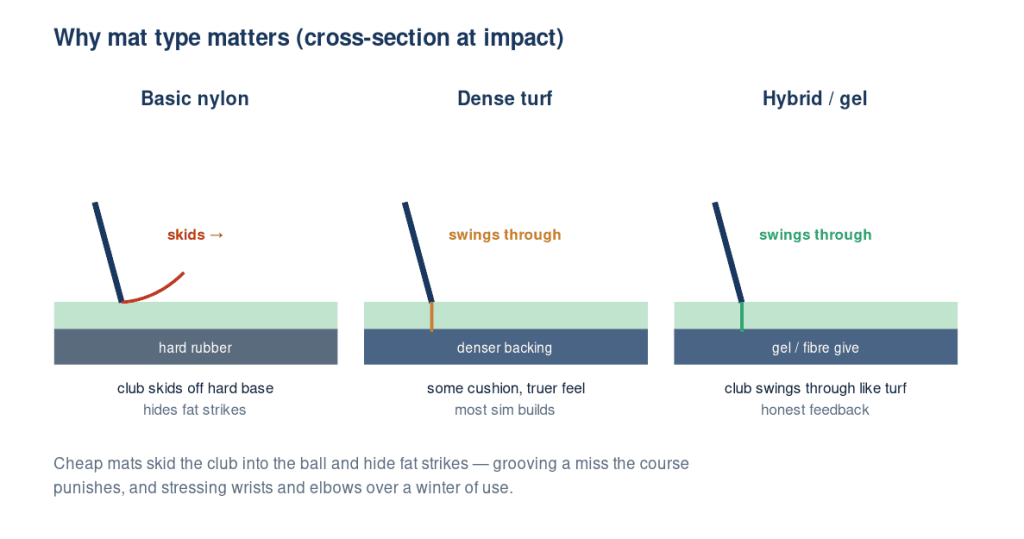
The standard commercial range mat, thin nylon turf over hard rubber, has a specific and well-documented flaw: hit slightly behind the ball and the club skids off the hard base into the back of the ball anyway. On grass, that same swing is a chunked shot losing 30 yards. On a cheap mat, it flies. Practise on that surface all winter and you groove a strike the course will punish all summer.
The second problem is physical. That skid transmits impact shock up the shaft into wrists and elbows, and a winter of daily sessions on a hard mat is a recognised route to golfer’s elbow. Both problems scale with use: for occasional swings, a basic mat is fine; for the several-sessions-a-week practice a home setup encourages, surface quality becomes a health decision.
The three types of mat
| Type | Typical UK price | How it behaves | Best for |
|---|---|---|---|
| Basic nylon range mat | £40-£150 | Firm, skiddy, forgiving of fat strikes | Occasional use, nets, tight budgets |
| Dense-turf mat | £150-£350 | Longer fibres, more cushion, truer feedback | Regular practice, most sim builds |
| Hybrid / divot-simulating | £400-£900 | Fibre or gel systems that let the club swing through like turf | Heavy use, coaching, strike-focused golfers |
Basic nylon (£40-£150). Widely sold on Amazon UK and by golf retailers in 1.5m squares. Fine as a stance mat, fine for a garden net you hit twice a month. The 1.5m x 1.5m format matters more than brand at this level: smaller “hitting strip” mats force a cramped stance unless paired with a stance mat.
Budget pick on Amazon UK: the FORZA all-weather golf mat is a sturdy, well-reviewed option in this tier. As an Amazon Associate we earn from qualifying purchases.
Dense-turf (£150-£350). The sensible middle for most simulator and net setups. Longer, denser fibres cushion the strike, feedback is closer to honest, and the shock transmission drops meaningfully. This is the tier our cost guide budgets for a mid-range build.
Hybrid and divot-simulating (£400-£900). Designs like TrueStrike’s gel-section mats and Fiberbuilt’s long-fibre panels, both available through UK stockists and both regulars in UK forum recommendation threads. The club interacts with the surface the way it does with turf: swing through it, feel a fat strike as a fat strike, no skid assist. TrueStrike in particular comes up repeatedly among UK builders as the upgrade people notice immediately and don’t reverse. If your setup is used most days, this tier earns its price in joints and honest feedback.
A note on stance comfort: some UK golfers pair a firmer hitting surface with a softer stance mat (Hybrid Me’s stance mats get UK forum recommendations for exactly this), which is a cheaper way to save your knees than upgrading the whole hitting surface.
Sizing and setup
Go 1.5m x 1.5m or pair a strip with a stance mat. A full swing needs your feet and the ball on the same level. The common mistake is a 30cm hitting strip on a bare floor, which puts the ball above your feet and quietly changes every swing.
Thickness and base matter for indoor floors. On concrete garage floors, a thin mat amplifies every problem above. A thicker rubber base, or rubber gym tiles under the mat, adds cushion and stops the mat creeping across the floor mid-session.
Tees: cheap mats take rubber tees only, which suit some golfers and infuriate others. Dense-turf and hybrid mats generally hold a real wooden tee. If teeing with a real tee matters to you, check this specification before anything else.
Pairing with a launch monitor: the mat sits directly in the reading zone of a camera-based unit, so a consistent, non-reflective surface helps. Nothing exotic required, but a disintegrating old mat shedding fibres in front of a £2,000 launch monitor is a false economy. See our small garages guide for how the mat fits the wider footprint.
Making it last
Mats wear where you hit, so move the ball position around the surface week to week rather than drilling the same square inch. Rotating the mat 180 degrees every few months spreads stance wear too. Brush the fibres up occasionally, keep it dry (garage damp shortens turf life and breeds odour), and expect a £150-£300 mat under heavy use to want replacing every two to three years, which is the figure our cost guide carries as an ongoing cost most buyers forget.
Common mistakes
Buying the mat last with whatever’s left. It takes every swing you make. Budget it like a component, not an accessory.
A hitting strip with no stance mat. Ball above feet on every swing. Either buy big or buy the pair.
Practising daily on a £50 mat. The skid teaches a false strike and the shock finds your elbow. If sessions are frequent, the mid tier is the minimum sensible spend.
Ignoring the floor underneath. A good mat on bare concrete still transmits shock. Rubber tiles underneath are a cheap upgrade that also protects the floor and quiets the room.
Chasing “range mat” as a spec. Commercial ranges buy for durability against thousands of strangers’ swings, not for feedback quality. Home practice deserves a better surface than the range, not the same one.
Frequently asked questions
How much does a golf driving range mat cost in the UK? £40-£150 for basic nylon mats, £150-£350 for dense-turf mats suited to regular practice, and £400-£900 for hybrid divot-simulating designs like TrueStrike and Fiberbuilt. Frequency of use should set the tier.
Are cheap golf mats bad for your elbows and wrists? Regular practice on thin, hard mats is a recognised contributor to joint strain, because the club skids off the firm base and transmits shock up the shaft. Occasional use is fine; daily winter practice on a hard mat is where problems develop.
What size golf mat do I need for home practice? 1.5m x 1.5m is the practical target for full swings, so your feet and ball sit level. Smaller hitting strips work only when paired with a stance mat of matching height.
Can I use a real wooden tee on a golf mat? On most dense-turf and hybrid mats, yes. Basic nylon mats generally accept only rubber tees. Check this specification before buying if it matters to your practice.
Which golf mat is best for a home simulator? Dense-turf mats around £150-£350 suit most home simulator builds, with TrueStrike and Fiberbuilt the frequently recommended upgrades among UK builders for heavy use. Prioritise a level stance, honest strike feedback, and a stable base over turf colour or branding.